Finding a job with a recent felony on your record can be a struggle. Does it get any easier with time? How long does a felony affect employment?
While the immediate consequences of a felony conviction are well known, felons also face long-term barriers that can make re-entry after a prison sentence or probation very challenging.
Finding a job is often difficult, and a felony conviction can still cause you problems decades after you finish serving your sentence.
Don’t be disheartened, though. Many employers will hire felons, and older felonies are less likely to result in a rejection when you apply for a job.
How Long Does A Felony Affect Employment?
Unless you live in a state or move to a state that limits the period an employment background check can cover, your felony could continue to lead to failed job applications.
That doesn’t mean you’ll never get a job, just that some of the jobs you apply for will reject you once they find out about your felony. This often depends on how old the felony is and on the policy of the employer.
Some career choices will generally be off limits for good. These include serving in the military (unless you qualify for a moral waiver), becoming a law enforcement officer, or joining the fire department.
Professions that require a state-issued license will also be harder to enter or resume after you’ve completed your sentence. These professions include doctor, registered nurse, lawyer, teacher, and security guard, among others. Often, the licensing board will at the very least require a period of 5 or 10 years to have elapsed since your conviction.
Unfortunately, your felony can negatively affect your employment prospects for a long time and limit your opportunities to move between jobs to progress on a career path.
Unlike other minority groups facing discrimination, felons aren’t protected by anti-discrimination legislation, and you can be denied employment because you have a felony, even if you’re experienced and fully qualified.
The Equal Employment Opportunity Commission (EEOC) guidance to employers states they shouldn’t have blanket policies that disqualify applicants with criminal backgrounds. But if an employer feels that hiring a felon would be detrimental to their business, they’re free to set a hiring policy that rejects felons.
Thankfully, many large employers have recently revised their hiring practices and are now much more felon-friendly.
How Do Employers Find Out About Your Felony?
Employers can find out about your felony in several ways.
- Through a question on the employment application form.
- By asking about criminal offenses at your interview.
- By running a background check.
Let’s look at each of those areas in more detail.
Criminal Offense Questions On The Application Form
It’s still fairly common to encounter a question about criminal offenses when you fill out a job application.
The application usually asks you to check a box if you’ve been convicted of a felony or misdemeanor, and then provide details about the offense.
Some employers will only ask about offenses in the last 5 years, 7 years, or 10 years. Others want to know if you’ve ever committed a felony or misdemeanor.
When the question refers to a specific timeframe, that’s a good sign that the employer is open to hiring candidates with older offenses, but less likely to consider a recent felony.
Often, employers include a statement informing candidates that answering yes to the criminal offense question won’t necessarily exclude them from employment.
That’s a sign the employer will make a decision based on the nature of the offense. For example, a felony drug possession conviction may not be an issue, while a felony assault would be. They’ll also look at the timeframe involved.
When a job application asks about criminal history, you should be honest. Having a felony conviction won’t always result in rejection. But if an employer discovers you were dishonest on your application, they won’t hire you.
If you’re on parole or serving probation, you need to report where you’re working. Your parole officer may call your employer, and if you haven’t been honest, that call will probably get you fired.
Ban The Box Laws
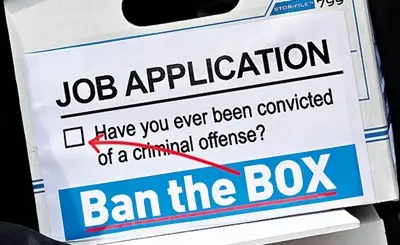
Some states and cities have introduced laws that prohibit some or all employers from asking about criminal convictions until later in the application process. These laws are known as Ban The Box Laws.
Federal government employers do not ask about criminal convictions on job application forms, and their Ban The Box policy also applies to federal contractors.
Many private employers have also voluntarily introduced Ban The Box policies.
Where Ban The Box laws or policies are in place, you may be asked about felony or misdemeanor offenses during your interview, unless the law or the company policy forbids that question being asked.
The point of the Ban The Box initiative is to ensure that candidates with criminal backgrounds are evaluated on their abilities and experience, instead of being rejected without consideration.
Criminal Background Questions During Your Interview
Unless laws or company polices prohibit asking about convictions until a conditional offer of employment has been made, you can be asked if you’ve been convicted of a felony or misdemeanor during your interview.
Everyone knows it’s a good idea to answer practice interview questions and work on interview technique. For felons, it’s also essential to practice explaining a felony conviction to an employer in case a question about your criminal offense comes up.
This is your opportunity to reassure the hiring manager that your felony offense won’t affect your ability to be a trustworthy employee.
You should take responsibility for the offense, acknowledge that you made a mistake, and explain what you’ve done to turn your life around. Providing character references and a Certificate of Rehabilitation can also be helpful at this stage.
Remember that many small/medium employers and all large employers carry out background checks. It’s always better to be honest about your past if you’re asked.
You won’t always be asked about your background, and some employers rely on the information in your background check rather than asking about felonies and misdemeanors at the interview. Why don’t they ask at the interview?
There are a couple of reasons employers choose not to ask. The first reason is that they have a policy that simply lists the felony offenses (and timeframes) that are incompatible with employment. If this is the case, it doesn’t matter how well you’ve rehabilitated, and there’s little point covering that ground at your interview.
The second reason is so that the interviewer’s bias doesn’t exclude acceptable candidates. A company may be willing to hire felons, but a hiring manager could let personal opinions get in the way. If this is the case, you’ll receive a job offer based on your abilities, then HR will look at your background and follow company policy.
Employment Background Checks
Employment background checks are the last hurdle you’ll have to overcome when you apply for a job. These usually take place once a conditional offer of employment has been made.
If you’ve already disclosed your felony on the application form or during your interview and the hiring manager has offered you a job, you’re almost there. But the background check could still disqualify you.
With many employers, the final hiring decision is made by the human resources department, and they’ll need to check your background report against their hiring policies and make sure there are no potential liability issues. A job offer will be withdrawn if HR decides your felony makes you a hiring risk.
When you supply the information for your background check, you could be asked to list felony or misdemeanor offenses.
Even if you’re not asked to disclose convictions (or you choose to omit them), the background check will search the county records for every address you’ve lived at and report any convictions listed.
How Long Does A Felony Affect Employment Background Checks?
Some states limit the period background checks can cover to 7 years. In other states, there’s no limit, and your offense will be reported no matter how much time has passed if the employer goes back that far. States with a 7-year limit are:
- California
- Colorado
- Kansas
- Kentucky
- Hawaii
- Maryland
- Massachusetts
- Montana
- Nevada
- New Hampshire
- New Mexico
- New York
- Texas
- Washington
An employment background check is a type of consumer report. The federal Fair Credit Reporting Act (FCRA) states that you must be given a free copy of your background report, and you must be told if information in your report is going to be used against you.
It’s important to check your report to make sure that the information is correct because credit reporting agencies can make mistakes.
Some employers have a procedure in place that allows you to supply additional mitigating information if your background report reveals a felony or misdemeanor.
Second Chance Employers Are Good News For Felons
Around one-third of the working-age population in America has a criminal conviction. Second-chance employers realize that if they exclude everyone with a criminal background, they’ll have a much smaller talent pool to recruit from.
Second-chance employers also know that former felons are more likely to become valuable long-term employees because they’re grateful for the job opportunity.
Depending on the company policy, second-chance employers may only look at the last 7 years of your background, or they may hire on a case-by-case basis.
For example, some second-chance employers are willing to hire non-violent felons, while others may hire candidates as long as the offense isn’t related to theft or fraud.
Re-entry service providers in your area will know which local businesses offer a second chance to felons, and they’re a great source of support and advice when you’re looking for a job.
Re-entry counselors can also help you get federal bonding insurance, which protects employers from some of the risks associated with hiring ex-offenders.
Some large employers have made a public commitment to second-chance hiring. These employers have signed the Fair Chance Business Pledge or have joined the Second Chance Business Coalition.
Second Chance Business Coalition Employers
- Accenture
- Allstate
- American Airlines
- Aon
- AT&T
- Bank of America
- Best Buy
- BorgWarner
- Cisco
- CVS Health
- Deloitte
- DICK’S Sporting Goods
- Eaton
- Gap Inc.
- General Motors
- The Home Depot
- Indeed
- JPMorgan Chase & Co.
- Kelly Services
- Koch Industries
- Kroger
- LKQ Corporation
- Lowe’s
- Mastercard
- McDonald’s
- Micron Technology
- Microsoft
- NBCUniversal
- PayPal
- PepsiCo
- Procter & Gamble
- Prudential Financial
- Ralph Lauren
- Randstad
- Schnitzer Steel Industries
- Target
- Texas Instruments Incorporated
- Total Wine
- Union Pacific
- United Airlines
- Verizon Communications
- Virgin
- Visa
- Vistra Corp.
- Walgreens Boots Alliance
- Walmart
Fair Chance Business Pledge Employers
- American Airlines
- Ben & Jerry’s
- Best Buy
- Busboys and Poets
- CVS Health
- Coca-Cola
- Dropbox
- Gap
- Georgia-Pacific
- Greystone Bakeries
- Hersheys
- Intel
- Johns Hopkins Medical Center
- Kellogg Company
- Kevin Plank Industries
- Koch Industries
- Kroger
- Lyft
- Microsoft
- Monsanto
- Oklahoma City Thunder
- Perdue Farms
- Prudential
- Staples
- Starbucks
- Target
- The Libra Group
- TrueBlue
- Tyson Foods
- Uber
- UnderArmour
- Unilever
- University of Pennsylvania
- VICE Media
- Walmart
- WeWork
- Xerox
Many more small and medium-sized companies have also signed the Fair Chance Business Pledge.
How Long Does A Felony Affect Employment? Final Thoughts
Wanting to know how long a felony affects employment is understandable, but there’s no single answer that will apply to every felon.
State law may prevent employers in your area from finding out about felony convictions older than 7 years. Or the law might not give you any protection at all, and your felony from 25 years ago will be the reason you didn’t get the job.
Employers may have felon-friendly second-chance hiring policies, or they may reject you as soon as you answer yes to the felony question on the application form.
Some employers will be prepared to give you a chance with one type of felony, but they’ll reject a candidate with a different felony conviction.
And some careers and professions will be very difficult to enter or off limits entirely, regardless of how much time has passed since your conviction.
As you apply for jobs in the future, you’re bound to face rejections because of your felony, but you won’t be rejected every time.
Felons can find stable and rewarding employment and build successful careers. And with more employers joining second-chance programs every year, your employment prospects may be better than you think.
Read Next: Does CR England Hire Felons In 2026?